
- 60% reduction in energy losses compared to IE3 induction motors
- €87,520 saved in electricity costs over 20 years for a 110 kW motor
- 157,540 kg CO2 emissions prevented over the motor's lifespan (equivalent to removing 37 gasoline cars for a year)
Experts view ABB's IE6 motor as a transformative advancement that sets a new benchmark for safety and efficiency in hazardous industries, offering a compelling solution for both economic and environmental challenges.
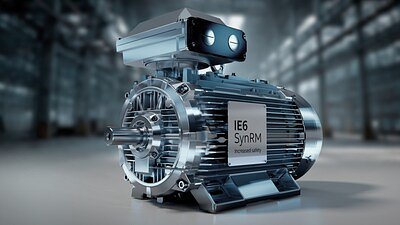
ABB's IE6 Motor: A New Era of Safety and Efficiency for Hazardous Industries
ZURICH, SWITZERLAND – May 14, 2026 – Global technology firm ABB has launched a groundbreaking electric motor that promises to redefine the standards for safety and energy efficiency in the world's most dangerous industrial environments. The company announced it is the first in the world to offer a magnet-free IE6 Hyper-Efficiency motor that is fully certified for use in hazardous areas, a development that could unlock substantial cost savings and environmental benefits for critical sectors.
This new motor, built on ABB's synchronous reluctance (SynRM) technology, is certified to the stringent ATEX and IECEx safety standards required for locations where explosive gases, vapors, or dusts are present. It targets industries such as oil and gas, chemicals, pharmaceuticals, and food and beverage, which have long faced the challenge of balancing high safety requirements with the growing pressure to reduce energy consumption and carbon emissions.
By achieving the IE6 efficiency class—the highest level currently defined—the motor offers a dramatic reduction in energy losses, marking a significant leap forward from the IE3 and IE4 motors that are common today. This innovation provides a direct pathway for heavy industries to slash operational costs while making tangible progress on their sustainability goals.
The Dual Imperative of Profit and Planet
For industrial operators, the new IE6 SynRM motor presents a compelling business case that directly addresses both economic and environmental pressures. ABB claims the motor reduces energy losses by up to 60 percent compared to the widely used IE3 induction motors. This leap in efficiency translates into significant financial returns and a remarkably fast payback period.
According to the company's analysis, upgrading a single 110 kW motor from a standard IE3 model to the new IE6 version could save an operator approximately €87,520 in electricity costs over a typical 20-year service life. This calculation is based on continuous operation at 75 percent load and an energy cost of €0.20 per kWh—a figure that is in line with, and in some cases below, current industrial electricity prices across Europe. The resulting payback period for the initial investment is a mere eight months.
Beyond the direct financial benefits, the environmental impact is equally impressive. The energy savings from that same 110 kW motor would prevent the emission of 157,540 kilograms of CO2 over its lifespan. To put this figure in perspective, it is equivalent to taking 37 gasoline-powered passenger cars off the road for an entire year. In an era where industrial decarbonization is a global priority, such reductions at the component level are critical.
Electric motors are the workhorses of industry, collectively accounting for an estimated 70% of all industrial electricity consumption. By targeting this area with a hyper-efficient solution, ABB is providing a powerful tool for companies to reduce their Scope 2 emissions and demonstrate a tangible commitment to their environmental, social, and governance (ESG) targets.
Engineering a Safer, Hyper-Efficient Future
Achieving IE6 efficiency in a motor designed for explosive atmospheres is a significant technical feat. At the heart of this innovation is ABB's synchronous reluctance (SynRM) technology, which offers several key advantages over traditional motor designs.
Crucially, the SynRM motor is magnet-free, meaning it does not rely on rare-earth permanent magnets. This design choice sidesteps the volatile supply chains, fluctuating costs, and environmental concerns associated with mining rare-earth minerals. It also eliminates the risk of magnets losing their power (demagnetization) at high temperatures, which enhances the motor's long-term reliability.
The absence of magnets and rotor windings results in a motor that runs significantly cooler than a conventional induction motor. This lower operating temperature is a major safety benefit in hazardous environments. It allows the motor to be certified with an "Increased Safety" (Ex e) protection type. In many Zone 1 applications, this could allow operators to use the cooler-running SynRM motor instead of a more complex and expensive "Flameproof" (Ex d) motor, which relies on a heavy-duty enclosure to contain a potential internal explosion.
Furthermore, the improved loadability of SynRM technology means it can deliver more power from the same physical size compared to an equivalent induction motor. In some cases, this could allow an operator in a Zone 2 area to use a smaller, less expensive motor to perform the same task, reducing both capital expenditure and physical footprint.
A Catalyst for Industrial Decarbonization
The launch of this motor arrives at a critical moment. Governments and regulatory bodies worldwide are tightening energy efficiency standards. The European Union, for instance, has already mandated IE4 efficiency for certain motor sizes, signaling a clear trajectory toward higher standards. ABB's IE6 motor not only meets but vastly exceeds these current and anticipated regulations, offering a "future-proof" solution for industries planning long-term capital investments.
This technological advancement aligns with the broader push for industrial electrification and decarbonization to meet global climate targets, such as those outlined in the Paris Agreement. The International Energy Agency (IEA) has repeatedly emphasized that energy efficiency is one of the most cost-effective and readily available tools for mitigating climate change.
"In its Energy Efficiency report 2025, the IEA highlights the pressing need to make sustainable technology available as an affordable choice. And that is central to ABB's own Engineered to Outrun philosophy," said Stefan Floeck, President of IEC LV Motors at ABB, in the company's press release. "With the world's first IE6 Hyper–Efficiency SynRM motor for hazardous areas, we now have the ideal solution for customers who must drive down their operating expenses while meeting stringent sustainability targets."
Redefining the Competitive Landscape
By securing ATEX and IECEx certification for a magnet-free IE6 motor, ABB has established a significant first-mover advantage in a specialized but highly valuable market segment. While major competitors like Siemens and WEG also offer extensive portfolios of high-efficiency motors for hazardous areas, ABB's announcement marks a new pinnacle of certified performance.
Competitors have made strong inroads in efficiency, with WEG offering synchronous motors certified up to the IE5 efficiency level for hazardous zones and Siemens providing robust IE3 and IE4 solutions. However, ABB's achievement of a certified IE6 solution for this application sets a new benchmark that competitors will now be measured against.
The combination of top-tier safety, unprecedented energy efficiency, and a sustainable magnet-free design creates a unique value proposition. For industries operating under the constant pressure to enhance safety, reduce costs, and minimize their environmental footprint, this innovation is not just an incremental improvement. It represents a new technological standard that will likely accelerate the transition to more sustainable operations across the global industrial landscape.