
- $18,000 prize: Grand prize for the underwater photography competition includes a polar expedition.
- 94% of photos: Estimated to be taken on smartphones by 2026.
- 60 meters depth: DIVEVOLK's SeaTouch housings enable smartphone use at this depth.
Experts agree that the rise of smartphone underwater photography is democratizing the field, enhancing accessibility, and contributing to ocean conservation efforts through increased visual documentation.
A Trip to Antarctica on Your iPhone? The New Wave of Underwater Photo Contests
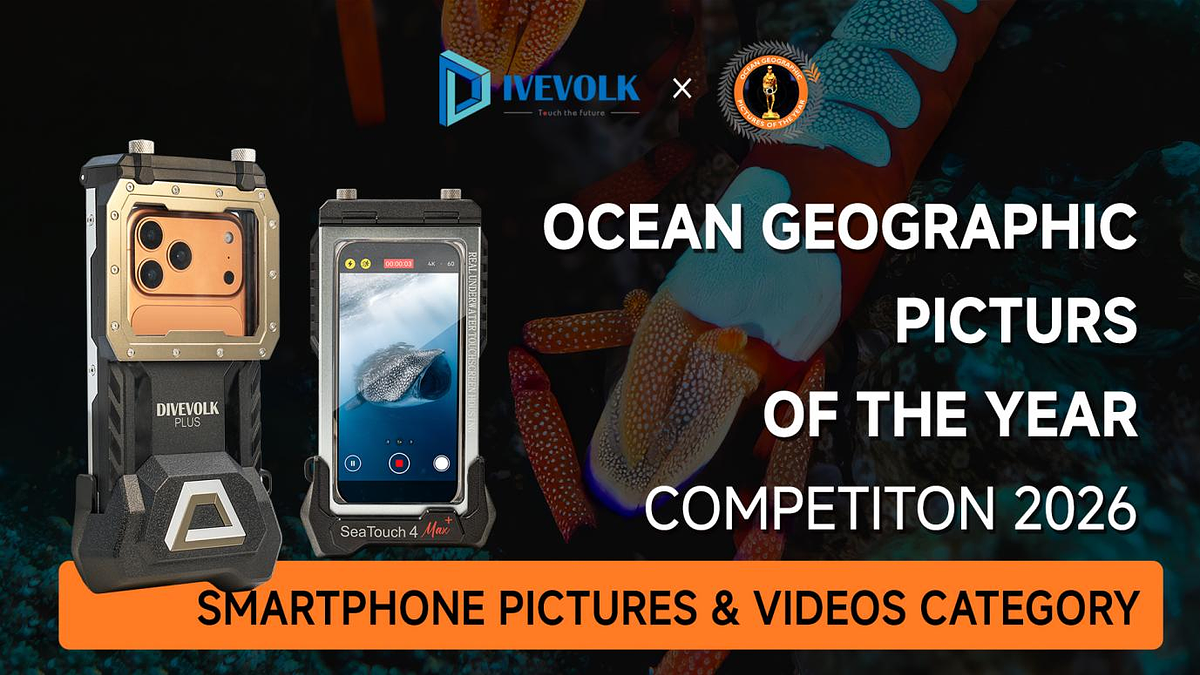
NEW YORK, NY – March 13, 2026 – The grand prize for one of the world's most prestigious underwater photography competitions is an $18,000 polar expedition. This year, the winning shot could be taken on the same device you use to scroll social media. This isn't a hypothetical scenario; it's the new reality of a rapidly evolving industry, underscored by DIVEVOLK's renewed sponsorship of the Smartphone Pictures & Videos (SMP) category at the 2026 Ocean Geographic Pictures of the Year (OG PICOTY).
For the second consecutive year, DIVEVOLK, a manufacturer of innovative underwater smartphone housings, is backing the category, signaling a seismic shift in a field once dominated by bulky, prohibitively expensive camera rigs. The winner of the SMP category not only receives the Jennifer Hayes Award of Excellence but is also automatically entered into the running for the competition's top honor: the "Master of Competition" award and its accompanying trip to the Arctic or Antarctic aboard the MV Sylvia Earle. The message is clear: the phone in your pocket is now a serious tool for high-stakes creative work.
Democratizing the Deep
The partnership between a pioneering tech company and a venerable competition highlights a powerful trend: the democratization of underwater photography. With an estimated 94% of all photos expected to be taken on smartphones by 2026, the dominance of mobile imaging on land is absolute. Now, that revolution is plunging beneath the waves.
Traditionally, capturing high-quality images of marine life required thousands of dollars in specialized cameras, lenses, strobes, and housings. This high barrier to entry limited the pursuit to a small, dedicated community. Companies like DIVEVOLK are actively dismantling that barrier. Their SeaTouch series of housings allows divers to use their smartphone's full native touchscreen capabilities at depths up to 60 meters, a feat achieved through a unique gel-filled membrane. This transforms a familiar, everyday device into a powerful underwater camera, complete with all its apps and connectivity.
“We sponsor OG PICOTY because there’s now a category built around exactly what our users do,” said a DIVEVOLK spokesperson in a recent press release. “People are shooting serious underwater work on phones inside our SeaTouch 4 Max housing. A competition that recognizes that work is worth supporting.”
This accessibility is creating a new wave of ocean storytellers. Divers who once left their cameras behind due to cost or complexity can now document their underwater experiences with ease. The OG PICOTY competition, now in its 12th edition and drawing entries from over 80 countries, has recognized this shift by creating a dedicated platform for these new creators. By offering substantial prizes, including DIVEVOLK's sponsored vouchers of $1,800 for first place, the competition legitimizes smartphone imagery and incentivizes participation from a much broader, more diverse talent pool.
The Rise of the 'Pro-Phone'
The growing acceptance of smartphones in professional circles is not just about accessibility; it's about performance. The idea of a phone winning a major photography award was once laughable, but rapid technological advancements have made it a reality. Last year, DIVEVOLK brand ambassador PJ Aristorenas won the OG PICOTY 2025 Smart Phone category with a stunning series of a Pikachu Nudibranch, captured using the SeaTouch 4 Max housing. The images were lauded for their exceptional color and detail, proving that mobile platforms can deliver results that rival their professional counterparts.
This is the era of the 'pro-phone.' Modern smartphones are packed with sophisticated multi-lens systems, larger sensors, and, most importantly, powerful computational photography algorithms. These AI-driven processes can overcome the physical limitations of small lenses, producing images with incredible dynamic range, low-light performance, and sharpness. One Qualcomm executive famously predicted that smartphone cameras could outperform high-end DSLRs within a few years, a claim that seems less audacious with each new device generation.
As a result, the line between 'amateur' and 'professional' equipment is blurring. While dedicated camera systems still offer advantages in specific areas, such as the use of powerful external strobes for advanced lighting, the gap is closing at a remarkable pace. For many applications, the convenience, versatility, and ever-improving quality of a smartphone in a high-tech housing present a compelling package. Entrants to the OG PICOTY SMP category are required to submit five images and a short video, all captured and edited on a smartphone, pushing the boundaries of what these devices can achieve from capture to final product.
A Rising Tide for Ocean Conservation
Beyond the technology and the accolades, the rise of smartphone underwater photography has profound implications for ocean conservation. The core mission of the Ocean Geographic Society, which organizes OG PICOTY, is to foster a love for the ocean and advocate for its protection. Photography and videography are among the most powerful tools to achieve this.
By putting a capable underwater camera in the hands of countless more divers, snorkelers, and ocean enthusiasts, this movement exponentially increases the volume of visual documentation of the marine world. Each photo of a vibrant coral reef or a majestic sea turtle serves as a data point and a piece of advocacy. This flood of user-generated content shared across social media raises global awareness about the beauty of our oceans and the threats they face.
This 'citizen science' aspect cannot be overstated. More eyes in the water mean a greater ability to monitor reef health, track species distribution, and document the impacts of pollution and climate change. A single, powerful image can galvanize public opinion and drive policy change far more effectively than a dry scientific report.
The OG PICOTY competition acts as a catalyst, encouraging participants to not just take pretty pictures but to tell compelling stories. By celebrating work that ignites a passion for the marine environment, the competition, with the support of sponsors like DIVEVOLK, is nurturing a global community of ocean ambassadors. As more people document their underwater worlds, they become more invested in protecting them, creating a virtuous cycle where technology and art serve the greater good of conservation. The deadline for entries on March 28, 2026, marks another milestone in this exciting convergence of technology, creativity, and environmental stewardship.
Topics & Related
Artificial Intelligence
Machine Learning
Sustainability & Climate
Product Launch
Partnership
Cryptocurrency & Digital Assets
ChatGPT
Software & SaaS
AI & Machine Learning
Related Company Pulse