
- 1 in 32,000: Prevalence of Kartagener syndrome, the rare genetic disorder affecting Thomas.
- 1 in 1,000: Incidence of pectus excavatum, the congenital chest deformity Thomas had.
- 3 years: Duration the metal bars will remain in Thomas’s chest to permanently correct his deformity.
Experts agree that advanced surgical techniques like the Nuss procedure, particularly with specialized systems such as the Park system, can dramatically improve both physical health and psychological well-being in patients with complex chest wall deformities.
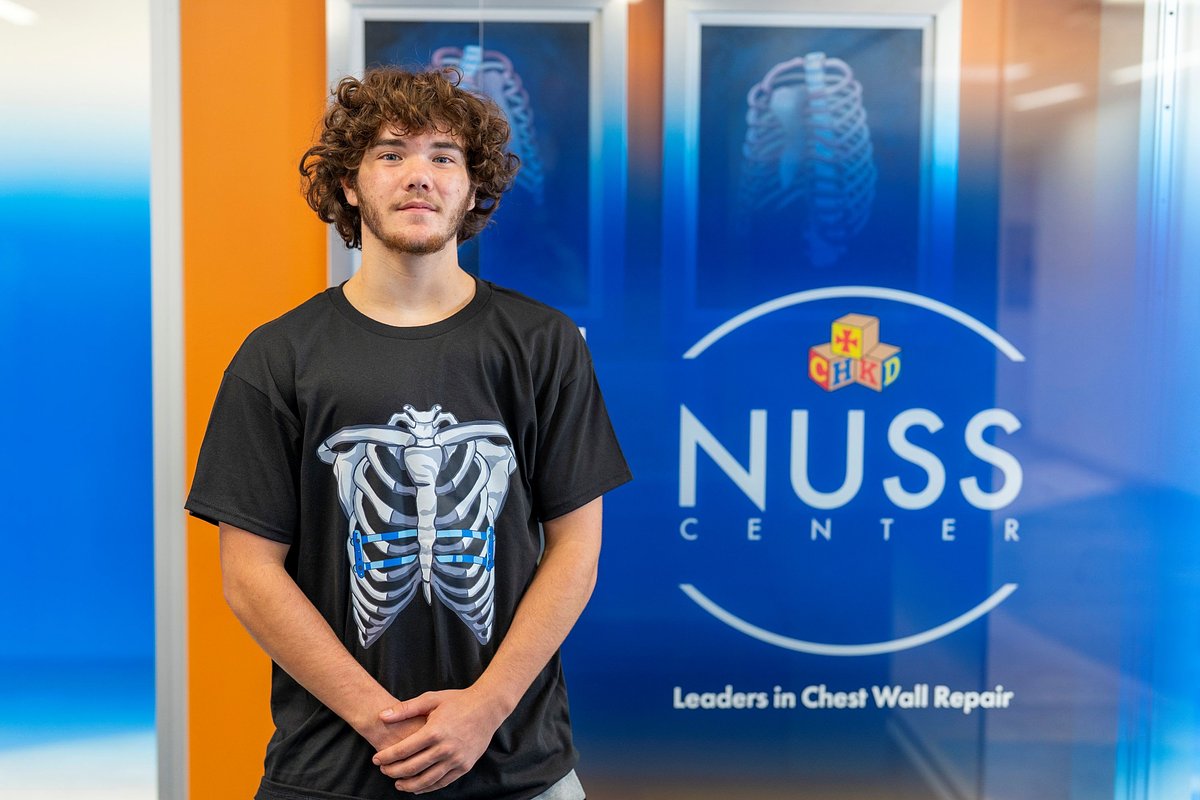
A Teen’s New Breath: How Surgery Rebuilt More Than Just a Chest
NORFOLK, VA – May 19, 2026 – For 16 years, Thomas Marlowe-Santiago lived with a body that was a constant medical puzzle. A series of rare genetic conditions meant his life was a cycle of respiratory infections, specialized therapies, and frequent hospital visits. But it was a deformity that worsened during his teenage years—a severely sunken chest—that began to crush not only his organs but also his spirit. A groundbreaking surgery at Children's Hospital of The King's Daughters (CHKD) didn't just correct the physical problem; it rebuilt his confidence and gave him a new lease on life.
“My self-confidence skyrocketed,” the Virginia Beach teen says, reflecting on the months after his procedure.
A Convergence of Rare Conditions
Thomas’s medical journey began the day he was born, when doctors discovered his heart beat loudest on the right side of his chest. He was diagnosed with situs inversus, a rare condition where the internal organs are a mirror image of their normal placement. This was one symptom of a larger genetic disorder called Kartagener syndrome, a form of primary ciliary dyskinesia affecting about 1 in 32,000 people. The syndrome causes dysfunction in the body's cilia, tiny hair-like structures responsible for clearing mucus from airways. For Thomas, this meant a constant battle with pneumonia, bronchitis, and sinus infections, requiring daily physical therapy with a vibrating vest to keep his lungs clear.
As if this weren't enough, Thomas also has Poland syndrome, a condition characterized by a missing pectoralis muscle on his left side. Then, during his adolescent growth spurt, he developed a severe case of pectus excavatum, the most common congenital chest wall deformity, affecting roughly 1 in 1,000 births. His sternum began to sink inward, compressing his heart and lungs.
“When you and I inhale, our sternum expands outward,” explains Dr. Franklin Margaron, a surgeon at CHKD who treated Thomas. “Thomas’ sternum rotated inwards toward his heart and lungs when he inhaled.”
This inward collapse posed a serious threat. “Severe pectus excavatum like Thomas’ can cause direct cardiac compression, which can lead to valvular dysfunction, arrhythmias, and a number of different problems,” Dr. Margaron notes. For Thomas, whose respiratory system was already compromised by Kartagener syndrome, the condition meant increasing shortness of breath and an inability to participate in normal physical activities.
A Legacy of Innovation
Fortunately for Thomas, his lifelong hospital, CHKD, is not just a local pediatric center but the world's leading institution for treating his specific chest deformity. The hospital's Nuss Center is named for Dr. Donald Nuss, who, along with his colleagues at CHKD in the 1980s, invented the revolutionary Nuss procedure. This minimally invasive technique, which involves inserting curved metal bars to push the sternum outward, became the global standard of care, replacing far more invasive and disfiguring surgeries.
Today, CHKD is a global hub for chest wall reconstruction, tackling the most complex cases and training surgeons from around the world. “A child who comes to CHKD for chest wall reconstruction today has many more options than children did even a decade ago,” says Dr. Michael Goretsky, division chief for Pediatric Surgery and co-surgical director of the Nuss Center. The center’s surgeons are versed in a wide array of techniques, allowing them to tailor solutions to each patient’s unique anatomy and lifestyle.
Thomas’s case fell squarely into the “most complex” category. The combination of his missing muscle from Poland syndrome, the severe rotation of his sternum, and his underlying respiratory issues presented a unique surgical puzzle. A standard procedure might not provide enough stability, and there was a significant concern: the daily vibrations from his chest vest, essential for his lung health, could be intensely painful or even dislodge the surgical bars after the procedure.
The Surgical Solution for a Unique Challenge
To address these challenges, Dr. Margaron chose a specialized variation of the Nuss procedure that utilizes the Park system, a set of instruments and implants developed in Korea by Dr. Hyung Joo Park. This system is designed for maximum stability, making it ideal for complex or asymmetrical deformities.
“Thomas’ unique physiology called for a dramatic degree of correction combined with the most stability we could offer,” says Dr. Margaron.
The Park system employs features like a “Claw Fixator” that securely anchors the bars to the ribs and “Bridge Fixators” that can link multiple bars together, creating a rigid, stable frame. This enhanced fixation would be crucial to withstand the forces of Thomas’s daily vest therapy and ensure the correction held firm.
On December 20, 2022, Thomas underwent the major surgery. His parents, Lisa and Brian LaRose, were understandably anxious. “This was the first major surgery that my son ever had. I was petrified that something would go wrong,” Lisa recalls. But she says Dr. Margaron put them at ease, providing constant updates. The family also felt enveloped by the hospital's supportive environment. “From the cafeteria workers to the cleaning crew, nurses, and doctors, everybody I came across was very friendly and courteous,” says Brian.
Thomas woke up from the surgery with a new feeling. “I trusted the doctors; I knew I had the top doctors working on me,” he says. “I remember feeling happiness and relief when I woke up from surgery.” He was discharged on Christmas Eve, a “Christmas miracle” for his family.
More Than a Physical Transformation
The changes were immediate and profound. “My balance got better. I could take a deep breath. I was able to run for longer,” Thomas says. With his chest no longer collapsing inward, he could finally begin strength training, an activity previously impossible due to his chest's rotation and muscular asymmetry. He now goes to the gym daily.
The surgery also addressed a deep emotional wound. The visible deformity had taken a psychological toll. “Before his surgery, Thomas went through a rough spot where he didn’t like the way he looked,” his mother, Lisa, shares. “That was really the main reason why we sought the referral to the Nuss Center.”
This psychological transformation is a well-documented and crucial benefit of pectus excavatum repair. Research consistently shows that correcting the deformity leads to significant improvements in self-esteem, body image, and overall quality of life, allowing patients to shed the self-consciousness that often leads to social withdrawal.
“There is usually a significant psychological change in patients,” Dr. Margaron confirms. “Patients gain more than the ability to breathe more comfortably. They gain confidence. It changes the trajectory of an individual’s future and the way they feel about themselves.”
The metal bars will remain in Thomas’s chest for three years, allowing his chest wall to permanently harden into its new, corrected shape. After they are removed, he plans to explore plastic surgery options to address the appearance of his missing pectoralis muscle. But for now, he is simply enjoying his new reality.
“The surgery has improved the way I look and feel. I feel normal,” Thomas says with a smile. “It’s definitely worth it.”