
- 3,000 flights: Pilot Mike Moore completed his 3,000th patient transport, a rare milestone in air medical services.
- 7,750 flight hours: Moore's total flight time reflects decades of experience and safety focus.
- $120 million: Air Methods' investment in safety programs since 2015 to enhance operational excellence.
Experts agree that air medical services, like those provided by JeffSTAT and Air Methods, play a critical role in improving survival rates for trauma patients, particularly when rapid transport is essential.
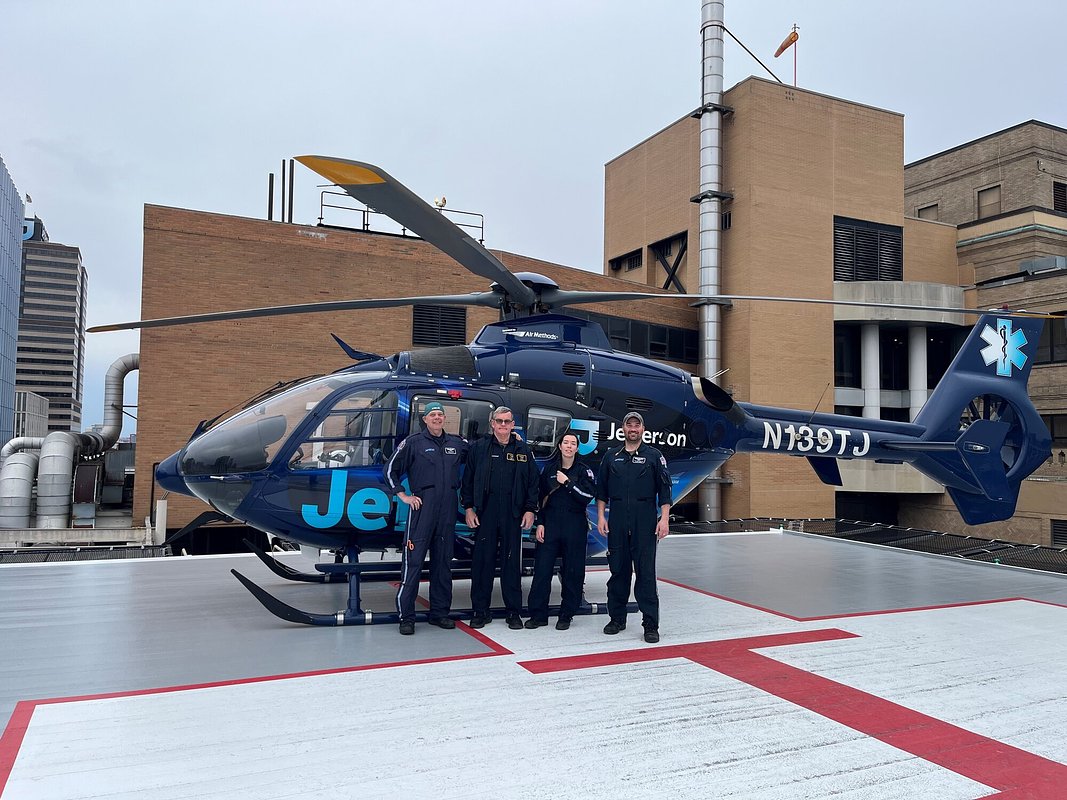
A Pilot's Milestone: 3,000 Flights and the Lifesaving Mission of Air Medical
LANSDALE, PA – March 30, 2026 – On a seemingly routine flight to Thomas Jefferson University Hospital, JeffSTAT Lead Pilot Mike Moore crossed a remarkable threshold in the sky over Pennsylvania. He completed his 3,000th patient transport, a milestone few air medical pilots achieve in a career, marking a moment of quiet reflection in a profession defined by urgency and precision.
Moore’s achievement is more than a number; it represents three thousand instances of critical intervention, where the speed and capability of a helicopter meant the difference between life and death. It also casts a light on the intricate, high-stakes world of air medical services, an industry navigating significant challenges to deliver lifesaving care against the clock.
A Career of Dedication
With a career in aviation spanning more than four decades, Moore’s path to the cockpit of a JeffSTAT helicopter was built on a foundation of service. He spent over 20 years as a pilot in the U.S. Marine Corps before transitioning to civilian life, bringing with him a disciplined and mission-focused mindset that has defined his nearly 20 years with Air Methods, the aviation operator for the JeffSTAT program.
His personal philosophy has been the same for every flight, from the first to the three-thousandth. “I approach each flight as if it were my own family member, or someone I know,” Moore stated. “If I can accomplish the flight safely and within our regulations, I am going to find a way to do it.”
This commitment is recognized by his colleagues and leadership. “Mike represents everything JeffSTAT stands for: professionalism, safety, and an unwavering commitment to patient care,” said Tom Mazzo, JeffSTAT interim director. “Reaching 3,000 transports is an extraordinary achievement, but what truly sets Mike apart is the way he leads, mentors, and partners with our clinical teams every day.”
Moore’s entry into the air medical field was as determined as his approach to flying. Nearing retirement from the Marines, he followed a medical helicopter to its base, introduced himself, and made his interest known. A year later, a position opened, and just two weeks after his military retirement, he was in the pilot’s seat for Air Methods.
The Engine of Lifesaving: A Critical Partnership
Moore’s milestone is a testament not only to individual dedication but also to the strength of a long-standing partnership. The JeffSTAT program, part of Jefferson Health, provides the highly skilled critical care clinicians for the flights. Air Methods, the nation’s largest air medical provider, supplies the essential aviation infrastructure: the aircraft, the mechanics who maintain them, and the pilots like Moore who fly them.
This collaborative model is the engine that powers critical care access across southeastern Pennsylvania, New Jersey, and Delaware. With a fleet of five aircraft, the partnership operates in both prehospital emergency scenes and complex inter-hospital transfers. As JeffSTAT marks 37 years of service and 22 years of helicopter operations, this synergy has become a benchmark for regional healthcare.
Stephen Konold, Air Methods Northeast regional vice president, noted Moore’s role in fostering this environment. “He leads with professionalism and humility, and he’s helped build an incredible base culture in Lansdale—one rooted in safety, service, and taking care of each other.”
This culture is vital in a service that has seen demand skyrocket. Moore recalls early shifts at the Lansdale base that passed without a single flight request. Today, the base is one of the busiest in the company, logging record patient transports in the last two years. Moore himself flew over 500 of those patients, a period of intense activity that underscores the growing reliance on air medical services.
Navigating a High-Stakes Industry
The air medical transport industry operates under immense pressure. Providers face a confluence of challenges, including a nationwide shortage of skilled pilots and medical crews, high operational costs for fuel and maintenance, and a complex regulatory landscape. Recent legislation like the “No Surprises Act” has altered billing practices, while Medicare reimbursement rates have historically failed to cover the full cost of a transport, putting financial strain on operators, particularly in rural areas.
Despite these hurdles, the value of helicopter emergency medical services (HEMS) is undeniable. Studies have repeatedly shown that for critically injured trauma patients, transport by air ambulance significantly improves survival rates compared to ground transport. The ability to deliver a specialized medical team to a patient and rapidly transport them to a definitive care facility, often within the “golden hour,” saves lives. Research suggests that for every 100 major trauma cases attended by an advanced air medical team, as many as five additional lives are saved.
In this context, Moore’s 3,000 transports represent a profound impact on community health, embodying the life-altering potential of a well-executed air medical system.
A Culture of Safety Above All
In aviation, longevity is synonymous with safety. Achieving 7,750 total flight hours, as Moore has, is impossible without a relentless focus on risk mitigation and procedural excellence. This personal commitment mirrors the corporate strategy of Air Methods, which has invested over $120 million in safety programs since 2015.
The company was one of the first air medical operators to have its Safety Management System (SMS) accepted by the FAA, a comprehensive, data-driven approach to managing safety risks. Furthermore, its investment in a state-of-the-art Level D flight simulator—the most advanced in the industry—allows pilots to practice and master responses to high-risk scenarios in a controlled environment. Since the implementation of this training, the company has eliminated IIMC-related accidents (inadvertent flight into poor weather), a historically significant risk factor in the industry.
For Moore, however, safety and success are ultimately about the team. He is quick to distribute credit for his milestone, emphasizing the collaborative nature of every mission.
“This milestone isn’t mine alone,” Moore insisted. “It takes an entire team to fly patients, from the maintenance professionals who keep our aircraft safe, our hospital partners who are highly trained and motivated, and our AirCom and Northeast regional leaders who support us every day.”
From a childhood fascination with crop dusters in Missouri to becoming a respected leader in a critical field, Moore’s journey is one of passion and purpose. His 3,000th flight is a landmark in a career dedicated to serving others, a career that continues to make a difference one flight at a time.