
- 2025 Agreement: Replaces a 2011 pact, marking a significant update in Indigenous-mining partnerships.
- Three-Year Process: Indigenous-led negotiations shaped the agreement, ensuring cultural and corporate principles were embedded.
- Rhodes Ridge Project: The agreement covers operations including the proposed multi-billion-dollar Rhodes Ridge development.
Experts view this agreement as a groundbreaking model for equitable and sustainable co-existence between Indigenous communities and the mining sector, emphasizing transparency, cultural preservation, and shared prosperity.
A New Dawn for Country: Nyiyaparli Redefine Mining Partnership
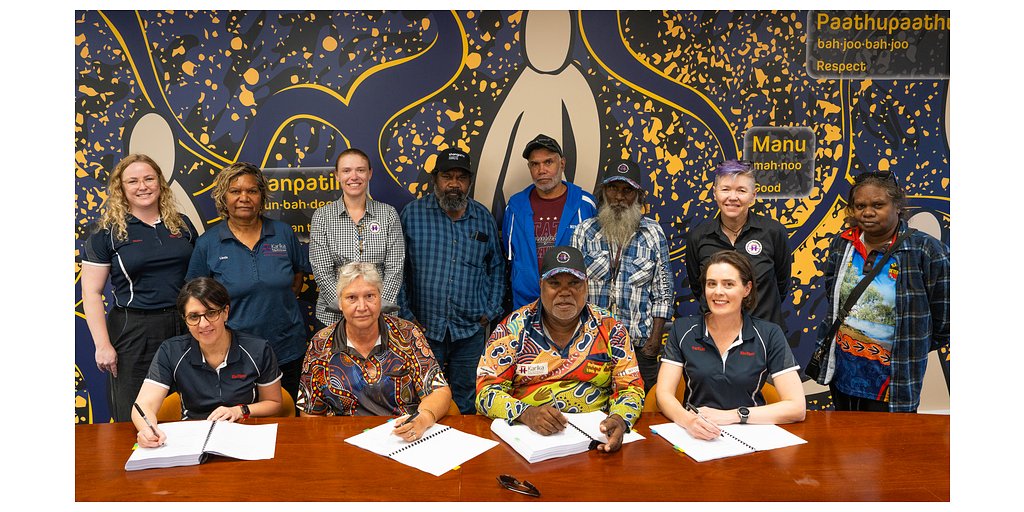
PERTH, Australia – December 01, 2025 – In a move that signals a profound shift in the relationship between Australia’s resources sector and its First Peoples, the Karlka Nyiyaparli Aboriginal Corporation (KNAC) and mining giant Rio Tinto have finalized a landmark agreement that places Indigenous leadership and cultural preservation at the heart of future development. The updated Native Title Agreement, signed late last month, replaces a 2011 pact and is being hailed as a potential blueprint for a more equitable and sustainable model of co-existence on Country.
The agreement provides a clear framework for Rio Tinto’s operations on Nyiyaparli land, which includes parts of the vast Hope Downs mining operations and the proposed multi-billion-dollar Rhodes Ridge development. More than just a legal document, however, it represents the culmination of a three-year, Indigenous-led process designed to ensure that the traditional owners of the land are not just consulted, but are central partners in decisions that affect their heritage and their future.
A Partnership Redefined by Indigenous Leadership
This is not a story of corporate benevolence, but one of Indigenous agency and resolve. The new agreement was not handed down from a boardroom; it was forged on the ground, shaped by the voices of the Nyiyaparli People. The process was meticulously guided by KNAC’s Agreement Review Committee, supported by Common Law Holders, and informed by extensive on-Country consultations and heritage advice.
This collaborative approach marks a decisive break from the past, where agreements were often negotiated under imbalanced power dynamics. Instead, the Nyiyaparli People actively steered the revisions to embed their cultural and corporate principles directly into the governance structures of the partnership.
KNAC Chairperson Leonard Michael Stream emphasized the collaborative nature of the achievement. “We appreciate working with Rio over the last three years to deliver a better deal for Nyiyaparli Country and for Nyiyaparli People that works for us both,” he stated upon signing the agreement. His words reflect a sentiment of mutual respect and a shared commitment to a durable, long-term relationship built on a stronger foundation than ever before. This process demonstrates a powerful evolution in Native Title negotiations, where Indigenous corporations are leveraging their rights and knowledge to secure outcomes that prioritize self-determination and community prosperity.
From Tragedy to Transparency: The Shadow of Juukan Gorge
It is impossible to view this new agreement outside the long shadow cast by the 2020 Juukan Gorge disaster. The legally sanctioned destruction of two 46,000-year-old rock shelters by Rio Tinto on the land of the Puutu Kunti Kurrama and Pinikura (PKKP) people sent shockwaves across the globe. The incident triggered immense investor backlash, a scathing parliamentary inquiry, and the resignation of top executives. Most importantly, it laid bare the systemic failures in corporate decision-making and the inadequacy of heritage protection laws that prioritized mining interests over priceless cultural history.
The global outcry forced a moment of profound reckoning within Rio Tinto and the wider industry. In the years since, the company has publicly committed to fundamentally changing its approach to Indigenous relations, moving from a model of compliance to one of partnership. This updated Nyiyaparli agreement is one of the most significant and tangible results of that commitment.
The pact’s emphasis on "greater transparency in decision-making" and "earlier and ongoing consultation" are direct responses to the key failures that led to Juukan Gorge. By formalizing these processes, the agreement aims to prevent a repeat of the past, ensuring that cultural knowledge and heritage concerns are not just a line item on a risk assessment but are foundational to all planning and operational activities. It reflects a hard-won lesson: that a social license to operate is not a one-time permit, but a continuous relationship built on trust, respect, and accountability.
Weaving Culture and Commerce into a Stronger Fabric
The true innovation of the Nyiyaparli-Rio Tinto pact lies in the details that translate principles into practice. It moves beyond rhetoric to establish concrete mechanisms for shared prosperity and protection of Country. The agreement delivers "enhanced cultural heritage and environmental protections," creating a more robust shield for sacred sites and the natural landscape.
Crucially, it establishes a framework for "enduring benefits" that will flow directly to the Nyiyaparli People. These are not passive royalties but active pathways to empowerment. The agreement includes specific provisions for employment opportunities, comprehensive training programs to build skills and capacity within the community, and dedicated support for Nyiyaparli-owned businesses to become key suppliers and partners. This focus on economic development is designed to build a self-sustaining future for the community, independent of the mine's lifecycle.
Perhaps most groundbreaking is the embedding of governance structures that reflect Nyiyaparli cultural principles. This ensures that the way the partnership is managed—from dispute resolution to strategic planning—is aligned with the community's own values and traditions. It is a powerful affirmation that Indigenous knowledge is not just a source of heritage information but a valid and essential framework for modern corporate governance. As Rio Tinto Iron Ore Chief Executive Matthew Holcz acknowledged, the agreement was built on the "guidance, cultural knowledge and technical expertise shared by Nyiyaparli."
Setting a New Standard for Australia's Resources Sector
This agreement arrives at a critical juncture for Australia. While the Juukan Gorge disaster prompted a review of Western Australia's outdated heritage laws, the path to legislative reform has been fraught with complexity and controversy. The new agreement demonstrates that corporations and Indigenous groups do not need to wait for governments to act. They can proactively forge best-practice standards that exceed minimum legal requirements.
By embracing principles aligned with Free, Prior, and Informed Consent (FPIC), the agreement provides a powerful case study for the entire resources sector. It shows that genuine partnership, while requiring significant investment in time and relationship-building, ultimately leads to greater certainty and stability for all parties. For Rio Tinto, this clarity is invaluable for its significant investments in the region, including the Rhodes Ridge project, considered one of the world's best undeveloped iron ore deposits. Investor confidence in this new, de-risked approach was reflected in a notable jump in the company's stock price following the announcement.
Ultimately, the updated pact between the Nyiyaparli People and Rio Tinto is more than a revised contract; it is a statement of intent. It offers a hopeful vision for how the often-conflicting demands of economic development and Indigenous rights can be reconciled. By placing Indigenous voices at the forefront and building a partnership on the principles of transparency and mutual benefit, it sets a new and urgently needed benchmark for progress.