
- 4,000+ emergency visits by children in 2024 for routine primary care
- 30% of households in the Las Vegas Trail neighborhood faced food insecurity
- 100,000+ people can be served annually by the new health center
Experts would likely conclude that the Las Vegas Trail Neighborhood Health Center represents a transformative model for addressing healthcare deserts, combining comprehensive medical services with community-focused design and social support programs to create lasting positive change.
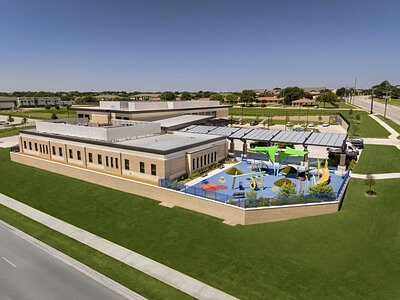
A Metamorphosis in Fort Worth: Health Center Revives Las Vegas Trail
FORT WORTH, TX – December 16, 2025 – For more than three decades, the Las Vegas Trail (LVT) neighborhood in west Fort Worth was a community in crisis, a recognized “healthcare desert” where basic medical services were out of reach for thousands of residents. The statistics painted a stark picture of need: in 2024 alone, children from the area made over 4,000 visits to Cook Children’s emergency rooms and urgent care centers for routine primary care. With nearly one in four families lacking reliable transportation, a simple doctor's appointment could become an hours-long ordeal.
That era of neglect has officially ended. This year, the community celebrated the opening of the Las Vegas Trail Neighborhood Health Center, a 40,000-square-foot facility that stands as a testament to collaborative will and innovative design. Located on a 3.7-acre plot donated by the City of Fort Worth, the center represents a monumental step forward in a revitalization effort that began gaining momentum in 2017. It is more than a building; it is a lifeline.
A Desert No More: A One-Stop Hub for Holistic Care
The new center is the result of an unprecedented partnership between Cook Children’s Health Care System, JPS Health Network, the City of Fort Worth, and Tarrant County. For the first time, Cook Children’s and JPS have co-located services, creating a seamless “one-stop shop” for families. Inside, residents can access pediatric primary care, adult family medicine, behavioral health services, and women’s health, eliminating the need to travel across the county for comprehensive care.
“I’m now right down the street,” one local mother of three expressed with relief, highlighting the immediate impact on families who previously faced significant logistical barriers to healthcare.
The facility’s vision extends far beyond clinical services. It directly addresses the deep-seated social challenges that have long plagued the LVT neighborhood, where a 2018 survey found a median monthly household income of just $1,099. To combat food insecurity, a major issue for 30% of local households, the non-profit WestAid operates an on-site food pantry five days a week. A demonstration kitchen, staffed by a registered dietitian, offers nutrition classes to empower residents with healthy eating skills.
Furthering its role as a community anchor, the center includes dedicated space for education classes on topics like parenting, asthma, and CPR. It also houses a Fort Worth Police Department storefront to foster positive community relations and a workforce training program designed to create pathways to entry-level healthcare jobs for local residents.
The Butterfly Effect: Design That Heals and Inspires
The building and its surrounding landscape are woven together by a powerful, unifying theme: the butterfly. Symbolizing growth, renewal, and the community’s ongoing metamorphosis, the motif is a constant and uplifting presence. The design choice is also a nod to the monarch butterfly migration route that passes through North Texas.
This vision was brought to life through an integrated design process led by architecture firm Oculus, Inc. and the multidisciplinary services firm Dunaway. Dunaway provided civil and structural engineering, planning and landscape architecture, environmental, and surveying services, ensuring every element of the site served both a functional and symbolic purpose.
Visitors are greeted by a plaza with butterfly-patterned pavement stamps and shade structures resembling butterfly wings. The landscape is intentionally planted with native pollinator species like Texas lantana and autumn sage, creating a vibrant habitat that supports the monarch migration. Hannah Rohlfing, Senior Interior Designer with Oculus, praised the collaboration, stating, “Collaborating with Dunaway to coordinate the butterfly design concept of the facility within their work was seamless and effective. The accomplishment of their design work was evident in the final solution that brought the site to life.”
The design team faced significant site challenges, including major grading changes. Dunaway’s engineers transformed this obstacle into an opportunity, designing large retaining walls that not only manage the terrain but now serve as a canvas for vibrant community murals painted by neighborhood residents, reinforcing a sense of ownership and pride.
Stability From the Ground Up
Beneath the beautiful facade lies a foundation of sophisticated engineering designed for longevity. The site’s challenging soil conditions required Dunaway’s structural engineers to design a suspended structural foundation, ensuring the building's long-term stability and performance. This robust base supports a structure that includes architecturally exposed large tube-steel canopies, which encircle the building and enhance its modern visual identity.
Safety and accessibility were paramount. To create a safe, child-focused environment and maximize usable space, the civil engineering team implemented an underground stormwater detention system, avoiding the need for open-water features. The team also added new public sidewalks and pedestrian pathways throughout the site, enhancing community connectivity. Multiple, clearly defined access points provide intuitive circulation for patients visiting pediatric or adult care, staff, and public safety officers.
This integrated approach proved crucial for navigating the complexities of the project. “We were able to lean on their expertise and specific familiarity with the local jurisdiction to solve issues... quickly and without encumbering the project schedule,” recalled Matthew Thole, Senior Project Designer with Oculus, reflecting on the smooth coordination with Dunaway’s teams on everything from site planting to structural solutions.
With the capacity to serve over 100,000 people, including more than 20,000 children, the Las Vegas Trail Neighborhood Health Center is a pillar of a broader neighborhood transformation. It stands as a powerful example of how strategic investment and thoughtful, community-focused design can reverse decades of decline. For a community once defined by what it lacked, the center has become a symbol of resilience, dignity, and a future where everyone has the opportunity to thrive.