
- $7 million agreement: Axmed will supply up to 16 million doses of azithromycin to children under five in Burkina Faso over three years.
- 13.5% reduction in child mortality: The MORDOR trial showed that administering azithromycin twice a year to children under five could reduce overall mortality by an average of 13.5%.
- 51% mortality reduction in wasted children: A 2025 study in Burkina Faso found that azithromycin reduced mortality by 51% in malnourished children, compared to 16% in non-wasted children.
Experts agree that while the mass administration of azithromycin offers immediate, life-saving benefits for children in high-mortality regions like Burkina Faso, it must be carefully balanced against the long-term risk of antimicrobial resistance, requiring rigorous monitoring and broader child survival interventions.
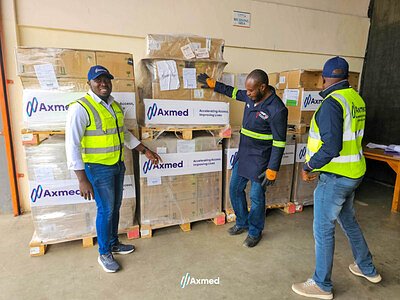
A Digital Lifeline: Axmed’s $7M Deal to Save Children in Burkina Faso
BASEL, Switzerland and NAIROBI, Kenya – March 19, 2026 – A landmark $7 million agreement announced today aims to deliver a powerful new weapon in Burkina Faso's fight against child mortality. Over the next three years, technology firm Axmed will supply up to 16 million doses of the antibiotic azithromycin to children under five, leveraging a digital procurement platform designed to transform how essential medicines reach the world's most vulnerable populations.
The long-term supply agreement supports Burkina Faso's participation in the Resiliency through Azithromycin for Children (REACH) programme, a public health intervention aimed at slashing the devastating toll of preventable childhood infections. For a country grappling with one of the highest child mortality rates globally, the initiative represents a significant and technologically advanced effort to turn the tide.
The Scientific Backbone: A Life-Saving, but Complex, Intervention
The strategy is rooted in the findings of major clinical studies, most notably the landmark MORDOR trial (Macrolides Oraux pour Réduire les Décès avec un Oeil sur la Résistance). Conducted in Malawi, Niger, and Tanzania, the trial demonstrated that administering azithromycin twice a year to children under five could reduce overall mortality by an average of 13.5%. The antibiotic is believed to lower the burden of deadly bacterial infections like pneumonia, sepsis, and diarrhea, which claim hundreds of thousands of young lives annually across sub-Saharan Africa.
However, the mass administration of a crucial antibiotic is not without significant complexities and debate within the global health community. The primary concern is the risk of fostering antimicrobial resistance (AMR), a growing global threat that could render life-saving drugs ineffective. In 2020, the World Health Organization (WHO) issued a conditional recommendation, advising the use of azithromycin for this purpose only in sub-Saharan African regions with very high infant mortality rates (over 60 deaths per 1000 live births). The WHO stressed that any such program must be paired with rigorous monitoring for AMR and efforts to strengthen broader child survival interventions.
A 2025 study in The Lancet Infectious Diseases underscored these concerns, finding that macrolide resistance rose in communities that received mass drug administration. This has created a high-stakes balancing act for policymakers: weighing the immediate, proven life-saving benefits against the potential long-term risk of increased drug resistance. Proponents argue that in the highest-burden settings, the immediate need to save children's lives is paramount, a calculation Burkina Faso has now chosen to make.
A New Model for Procurement in Global Health
At the heart of this initiative is Axmed, a company aiming to overhaul the traditionally fragmented and opaque system of global health procurement. Described as a technology-enabled B2B marketplace, its platform connects governments and other large-scale buyers directly with a global network of vetted pharmaceutical manufacturers.
By digitally aggregating demand, Axmed claims it can increase market transparency, drive down costs, and ensure quality at a scale previously difficult to achieve. This model represents a significant departure from traditional, often one-off purchasing that can be slow, expensive, and lacking in robust quality assurance.
"Burkina Faso is showing what's possible when national leadership is paired with modern procurement infrastructure," said Emmanuel Akpakwu, Founder and CEO of Axmed, in a statement. "This agreement demonstrates that even in periods of fiscal constraint, governments can secure quality-assured medicines at scale, faster, more affordably, and with full sovereignty over procurement decisions."
This emphasis on government sovereignty is a key pillar of the emerging trend in global health. The partnership operates directly through Burkina Faso's national health and procurement ecosystem, aiming to strengthen local systems rather than bypass them. All medicines supplied under the agreement are approved by Stringent Regulatory Authorities (SRAs), ensuring they meet the highest global quality standards.
"Scale should never come at the expense of safety or sovereignty," added Felix Ohnmacht, Axmed's Chief Commercial Officer. He described the approach as a "new gold standard for global health procurement" that gives governments control while ensuring medicines meet the same standards expected in leading hospitals anywhere in the world.
Country-Led Solutions in a High-Stakes Environment
For Burkina Faso, the context is critical. In 2018, the child mortality rate in sub-Saharan Africa stood at a staggering 78 deaths per 1000 live births, a figure far from the UN Sustainable Development Goal of 25 per 1000. The Axmed agreement is not merely a donation but a strategic procurement decision by a sovereign government to tackle this crisis head-on.
Recent research adds further weight to this decision. A 2025 study in Burkina Faso (the CHAT trial) found that the mortality-reducing effect of azithromycin was dramatically higher in wasted children—a 51% reduction compared to 16% in non-wasted children. In a region where malnutrition is a persistent challenge, this finding suggests the intervention could be even more impactful than originally thought.
The agreement is being framed as a model for "durable, country-led execution." By leveraging a digital platform, the government can access competitive global pricing and quality assurance without ceding control to external donors or intermediaries. This reflects a broader shift in international development away from traditional aid models and towards partnerships that build sustainable, nationally-owned systems.
Navigating the Path Forward: Promise and Potential Pitfalls
While the partnership holds immense promise, global health experts caution that the path forward requires careful navigation. The three-year, $7 million agreement is a significant commitment, but questions of long-term sustainability will inevitably arise. The ultimate success will depend on whether this model can build lasting local capacity for procurement and supply chain management beyond the life of the initial contract.
Furthermore, the specter of antimicrobial resistance remains the most significant long-term risk. The program in Burkina Faso will be a critical test case, watched closely by the global health community. Observers will be keen to see if the robust monitoring for AMR, as stipulated by the WHO, can be effectively implemented on such a large scale.
The initiative represents a bold step, placing a bet that technological efficiency and national leadership can unlock life-saving gains for children today. The challenge will be to ensure these immediate victories are secured without mortgaging the future effectiveness of the world's most essential antibiotics.