
- 98% efficacy: The biofilm binds with up to 98% of micro- and nanoplastics in lab tests, facilitating their safe removal from the body.
- 50+ patents: Quorum Innovations holds over 50 patents worldwide for its biofilm-based protection technology.
- 2025 Microplastics Safety Act: Bipartisan legislation introduced in July 2025 to study human health effects of microplastics.
Experts view this biofilm as a promising biologically inspired defense against microplastics, though they emphasize the need for peer-reviewed studies and independent validation to confirm its efficacy and safety in humans.
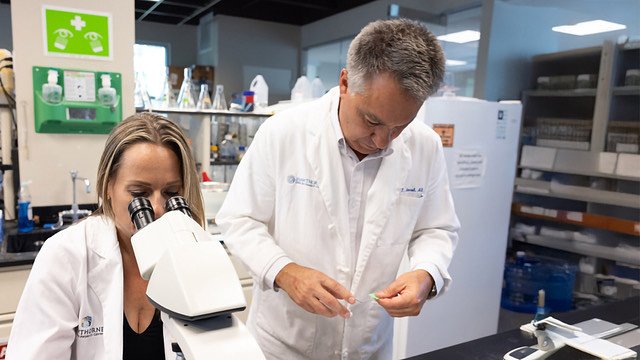
A Biological Shield: Can a New Biofilm Defend Us From Microplastics?
SARASOTA, FL – January 07, 2026 – As scientists warn that microscopic plastic particles are infiltrating everything from our blood and lungs to placentas and brain tissue, a Florida-based biotechnology company has announced a discovery that offers a novel line of defense. Quorum Innovations, founded by physician-scientists, revealed a naturally inspired biofilm that, in laboratory tests, has demonstrated the ability to intercept and expel the vast majority of ingested microplastics from the digestive system.
The breakthrough, which comes as humanity grapples with its pervasive plastic footprint in what some call the 'Plasticene Era,' proposes a radical shift in strategy: instead of just cleaning up the environment, we may soon be able to reinforce our body's internal defenses against the plastic we cannot avoid.
The Science of an Internal Shield
At the heart of the announcement is a protective biofilm - a collective of microorganisms that adhere to surfaces. According to Quorum Innovations, their proprietary biofilm is designed to function as a biological shield within the gut. The company reported that in laboratory settings, this biofilm was able to bind with up to 98% of micro- and nanoplastics, facilitating their safe removal from the body before they can be absorbed into tissues and enter the bloodstream.
This approach notably avoids drugs or harsh chemicals, instead leveraging and reinforcing the body's existing barrier mechanisms. The concept is detailed in the new book From Miracles to Menace: How Plastics Rewrote Human History.
"Plastics are no longer just an environmental problem - they're a human one," said Dr. Eva Ann Berkes, co-founder of Quorum Innovations. "They're in our food, our air, and increasingly, our bodies. This biofilm represents a biologically inspired shield built from mechanisms nature already gave us."
While the 98% efficacy claim from internal lab tests is striking, the scientific community will be watching for forthcoming peer-reviewed studies and independent replication, a standard and necessary step for validating any major scientific breakthrough. The underlying principle, however, is grounded in established science. Biofilms are known to interact with and accumulate microplastics in aquatic environments, and researchers have been exploring microorganisms for their potential to degrade plastics. Quorum’s innovation lies in harnessing this interaction for a specific human health application.
From Battlefield Defense to Public Health
The origin of this potential public health tool is as compelling as its application. The foundational science was developed not in a quest to solve plastic pollution, but through two research awards from the U.S. Department of Defense's Defense Advanced Research Projects Agency (DARPA), an agency known for fostering breakthrough technologies for national security.
Drs. Berkes and Nicholas T. Monsul were originally tasked with creating microbial protective barriers to shield soldiers and first responders from chemical and biological threats. The core objective was to develop a barrier that could prevent harmful particles from crossing into the body. By adapting this same defensive principle, the researchers pivoted the technology from a military application to a civilian one, targeting the invisible threat of microplastics.
This transition from battlefield to body highlights a powerful pathway for innovation, where defense-funded research yields unexpected solutions for global societal problems. The founders bring a wealth of expertise to the endeavor. Dr. Monsul trained at Yale University School of Medicine and The Johns Hopkins Hospital, while Dr. Berkes completed her medical training at the University of Florida and advanced research at The Scripps Research Institute, focusing on immunology. Their company, which holds over 50 patents worldwide, has spent more than a decade researching this biofilm-based protection.
Navigating a New Market and Regulatory Hurdles
Despite the promising science, the path from a laboratory discovery to a publicly available product is complex. Quorum Innovations' biofilm represents a new category of intervention, and its classification - whether as a dietary supplement, a medical device, or a novel therapeutic - will determine its regulatory journey with the U.S. Food and Drug Administration (FDA).
Currently, there is no clear precedent for an ingestible product designed to remove microplastics, creating a significant regulatory challenge. The FDA has addressed other emerging contaminants like PFAS by encouraging voluntary phase-outs, but a proactive internal defense product is uncharted territory. Gaining approval will likely require rigorous clinical trials to prove both safety and efficacy in humans.
The market for such a solution, however, is undeniably vast and growing. Public awareness and anxiety about microplastics are at an all-time high. The industry landscape for mitigation is nascent but active, with various approaches being explored. These range from lifestyle changes and water filtration to more advanced concepts. Companies like Microplas Technologies are developing binding compounds for digestive decontamination, while others, such as BluumBio, are focused on microbial solutions for environmental degradation. Quorum Innovations’ ingestible biofilm positions itself uniquely as a direct, biologically-based intervention for human digestive health.
A Political Climate Primed for Solutions
The timing of Quorum Innovations' announcement could not be more opportune, as political and public policy momentum to address the health impacts of plastics is building.
In Washington, the bipartisan Microplastics Safety Act (H.R. 4486), introduced in July 2025, signals a growing legislative urgency. The bill directs the FDA to conduct a comprehensive study on the human health effects of microplastic exposure and recommend actions. Its sponsors, spanning both parties and chambers of Congress, underscore the widespread concern over the issue.
Furthermore, the "Make America Healthy Again" (MAHA) commission, established by executive order in February 2025 to tackle childhood chronic diseases, identified chemical exposures, including microplastics, as a potential driver of illness in its initial report. While some critics point to potential contradictions between the administration's health rhetoric and its environmental budget proposals, the inclusion of microplastics in high-level public health discussions is significant.
This confluence of scientific innovation, public demand, and political will creates a fertile ground for solutions. As research continues to uncover the extent of plastic contamination within our own bodies, a technology born from military defense research may soon become a critical tool in protecting human health in the Plasticene Era. The journey of this microscopic shield from the lab to the public will be a crucial one to watch.